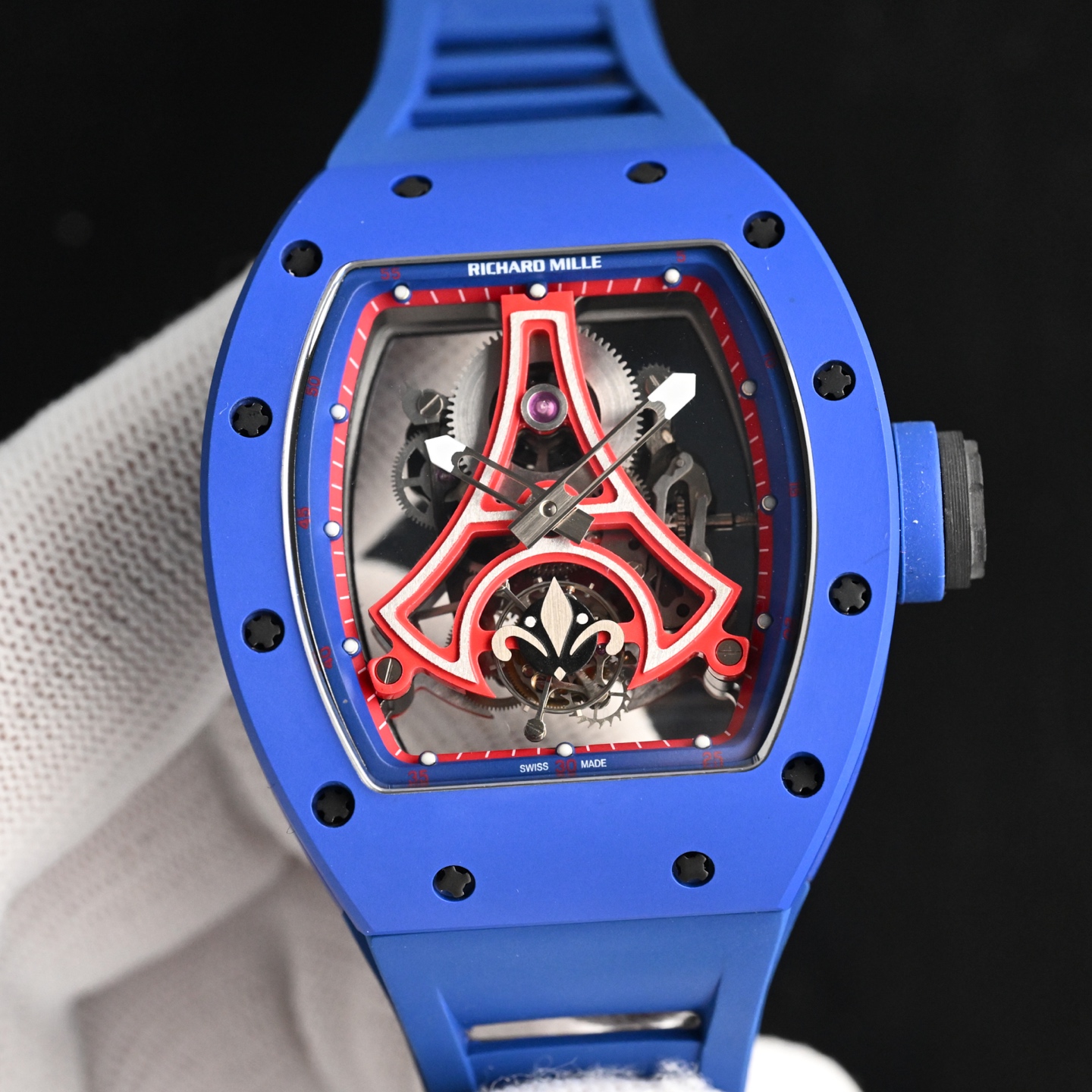
What You're Really Buying When You Look at a Richard Mille Tourbillon Replica
If you're searching for a Richard Mille replica, you're probably not new to watches. Most buyers at this level already understand they're not just buying timekeeping - they're buying visual engineering, wrist presence, and a very specific kind of attention.
From my experience, the biggest shift you need to make is this: you're not buying a "copy of a $500k watch." You're buying a mechanical interpretation of it, with trade-offs that matter more than people admit.
A tourbillon version changes everything.
Why the Tourbillon Matters More Than You Think
On paper, a tourbillon is about precision. In reality, especially in the replica world, it's about visual credibility. A Richard Mille without a working tourbillon can look good in photos, but once someone handles it, the illusion breaks quickly.
What makes this complicated is that most tourbillon replicas are not true clones of Richard Mille calibers like RMUL1 or RM27-01. Instead, they use adapted Chinese-made flying tourbillon movements.
So What Does That Mean for You?
It means your decision shouldn't be "Is this accurate?" but rather:
- How convincing is it on the wrist?
- How stable is the movement over time?
- Can it realistically be maintained?
One common mistake is assuming higher price equals better mechanics. That's not always true here.
If you're coming from other replica categories like high quality fake rolex, the difference is dramatic. Rolex replicas rely on mature cloned movements. Richard Mille tourbillons do not.
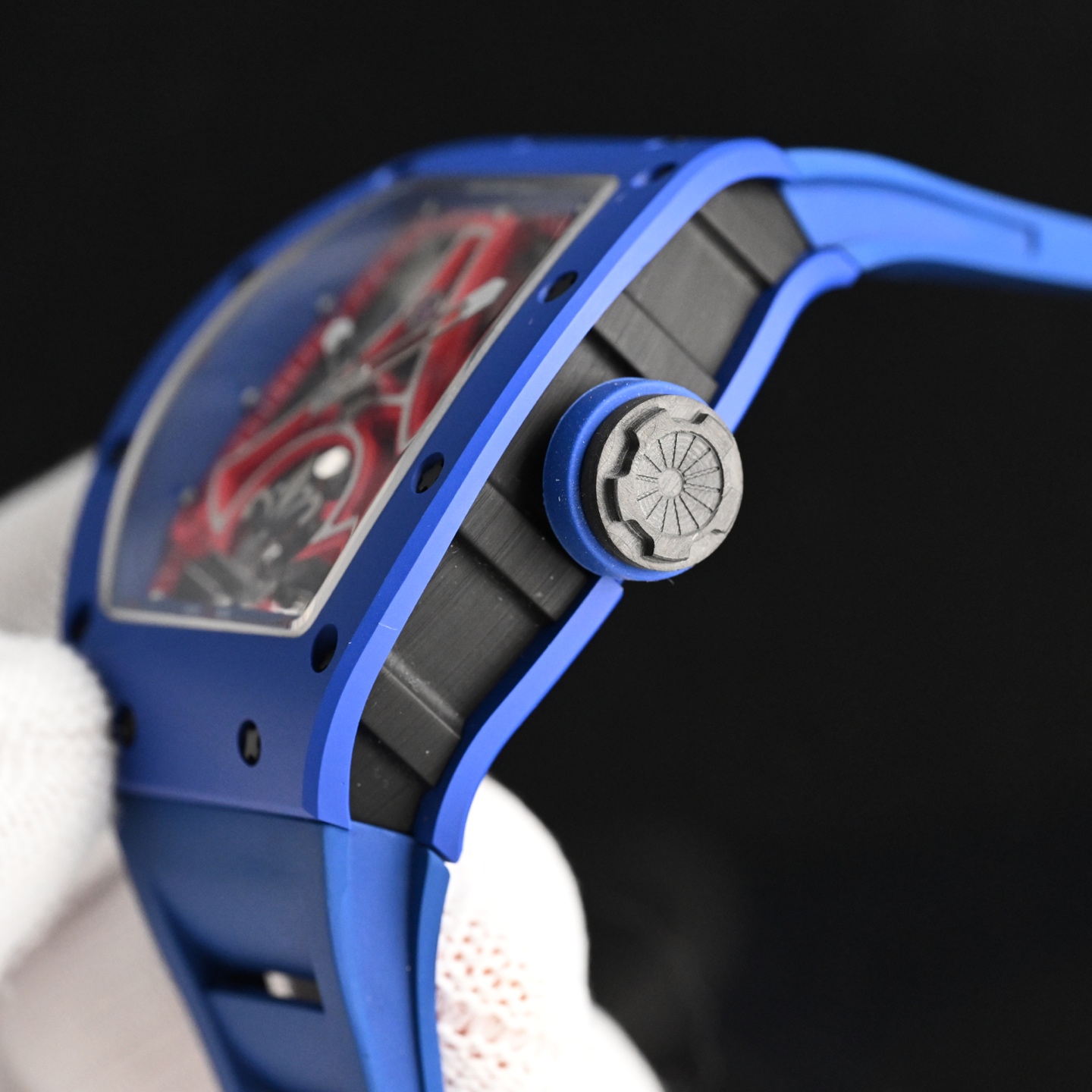
Manual-Wind Tourbillon Movements: What's Actually Inside
Let's get specific, because this is where most articles stay vague.
Common Movements Used in Replica Richard Mille Tourbillons
Most replica Richard Mille watches with tourbillons use one of the following:
1. Sea-Gull ST8000 / ST8230 Series
- Type: Manual-wind tourbillon
- Power reserve: ~40-50 hours
- Beat rate: 21,600 bph
- Clone status: Not 1:1 clone
- Structure similarity: Low to moderate
These are the most widely used because they are relatively stable for a tourbillon at this price point. However, they are round movements adapted into tonneau-shaped cases.
2. Shanghai Flying Tourbillon (Skeletonized variants)
- Type: Manual-wind flying tourbillon
- Power reserve: ~36-45 hours
- Clone status: Not clone
- Structure similarity: Moderate visually, low mechanically
Factories skeletonize bridges to mimic RM architecture, but internally, the layout is very different.
3. Custom Skeletonized Tourbillon (Factory-modified)
- Used by: BBR Factory (in higher-end builds)
- Power reserve: ~50 hours
- Clone status: Partial aesthetic mimic
- Structure similarity: Higher visually, still not true clone
These try to replicate the openworked RM look, including layered bridges and colored components.
Why None of These Are True 1:1 Clones
Real Richard Mille movements are designed specifically for their cases. They're not adapted - they're integrated.
Replica movements are:
- Originally round
- Modified to appear angular
- Decorated to mimic RM finishing
So What's the Real-World Impact?
- Alignment issues: Tourbillon position may be slightly off-center compared to gen
- Thickness: Caseback height often slightly exaggerated
- Servicing: Requires a watchmaker familiar with Chinese tourbillons
From what I've seen, stability varies a lot. Some run well for years, others develop amplitude issues within months.
Comparing Two Real Options: BBR vs KVF Tourbillon Builds
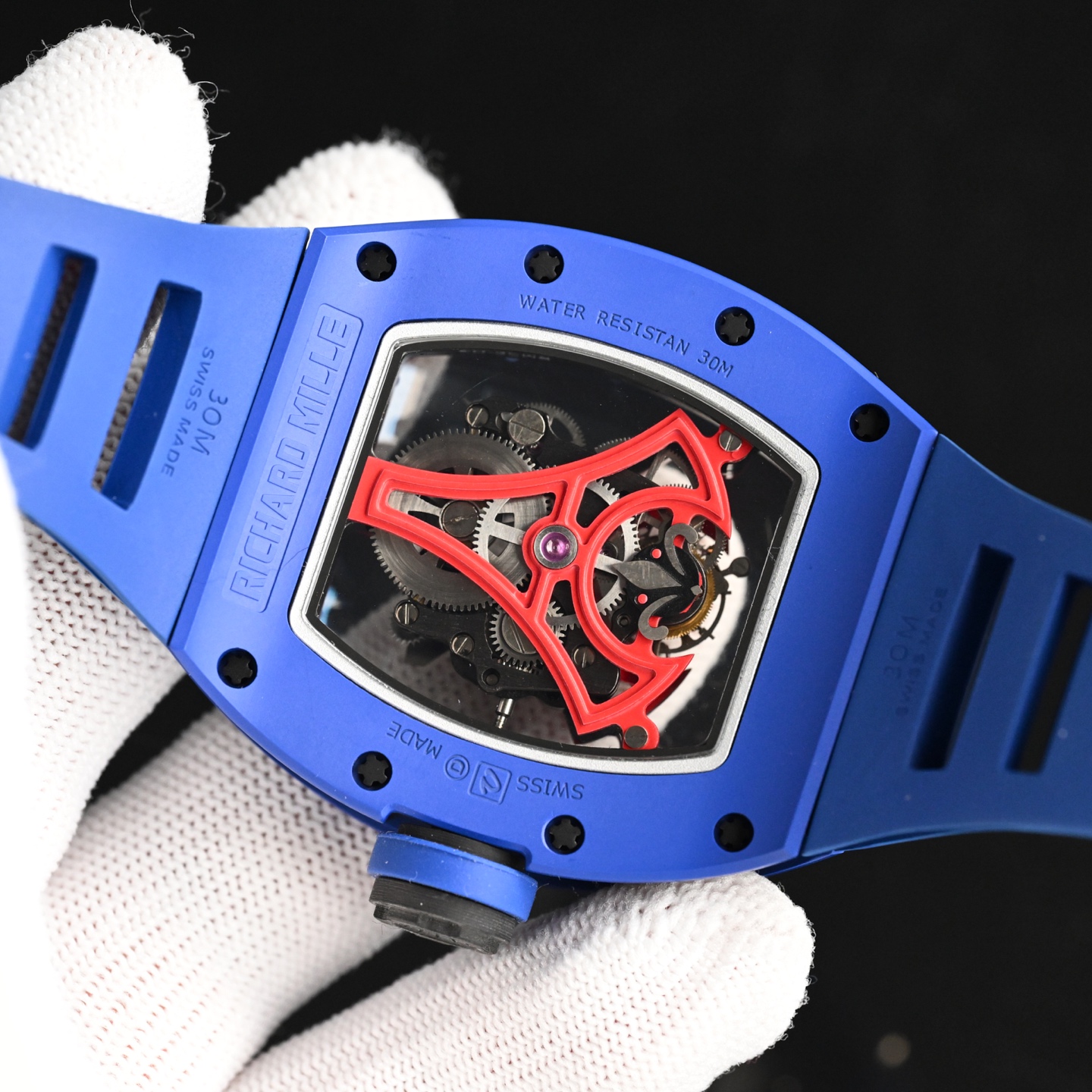
If you're seriously considering a replica Richard Mille watches purchase, you'll likely end up choosing between factories.
BBR Factory Tourbillon Models
What they do well:
- Better skeletonization
- More accurate bridge layout
- Improved finishing (especially in colored components)
Movement:
- Modified Chinese tourbillon (likely Sea-Gull base)
- Power reserve: ~45-50 hours
- Stability: Above average for category
KVF Tourbillon Attempts
KVF is stronger in non-tourbillon RM models, but they've experimented with tourbillons.
What they do:
- Focus more on exterior case accuracy
- Less refined movement finishing
Movement:
- Basic tourbillon module
- Power reserve: ~40 hours
- Stability: Inconsistent
So Which One Should You Choose?
In my experience:
- If your priority is visual authenticity -> BBR
- If your priority is price -> KVF (but with risk)
One common mistake is choosing based on macro photos. Under magnification, everything looks impressive. On the wrist, differences become obvious.
If you've ever compared replica rolex models, you'll notice consistency is higher there. Richard Mille tourbillons are still a niche, less mature category.
Wrist Test vs Macro Test: The Most Overlooked Reality
This is something I rarely see discussed, but it matters more than specs.
What Happens in Macro Viewing
When you zoom into photos:
- You see finishing details
- You notice engraving depth
- Movement looks complex and impressive
Factories design for this.
What Happens on the Wrist
On the wrist:
- You see proportions
- You feel weight distribution
- You notice how the tourbillon moves in real time
Why This Difference Matters
A watch can pass the macro test and fail the wrist test.
For example:
- Tourbillon rotation might feel slightly jerky
- Case curvature may not sit flush
- Crown winding resistance may feel inconsistent
So What Should You Prioritize?
From what I've seen:
- Prioritize case ergonomics over movement decoration
- A slightly less detailed movement that runs smoothly is better than a "perfect-looking" unstable one
This is especially true when buying a fake Richard Mille for sale listing online, where photos are optimized.
Buyer Mistakes That Cost You Money
Mistake 1: Assuming All Tourbillons Are Equal
Just because it says "tourbillon" doesn't mean quality is the same.
Why this happens:
- Sellers rarely disclose movement origin
- Buyers focus on aesthetics
Real impact:
- You may end up with a fragile movement
- Repair costs can exceed the watch value
Mistake 2: Ignoring Manual-Wind Reality
These are not automatic watches.
What this means:
- You need to wind daily
- Overwinding risk exists if mechanism is rough
From my experience, winding feel is one of the biggest tells of quality.
So what?
- A poor winding system leads to long-term wear issues
- Smooth winding = better internal finishing
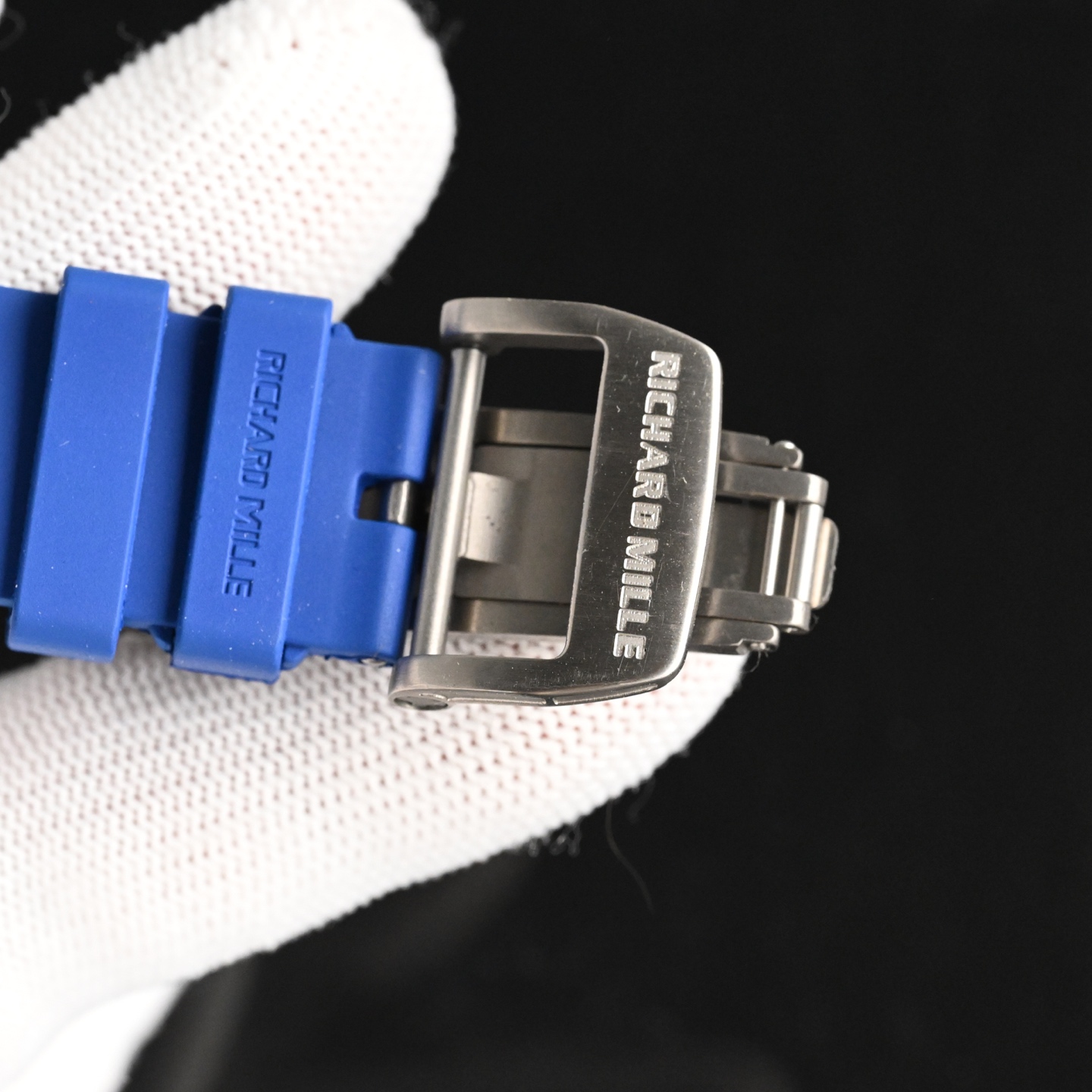
Real Ownership Experience: What You Should Expect
Owning a Richard Mille replica watches piece with a tourbillon is very different from owning standard replicas.
Daily Use
- Not ideal for rough wear
- Best treated as a rotation piece
Reliability
- Expect variation between units
- Some run perfectly, others require adjustment
Maintenance
- Not every watchmaker will touch it
- Parts are not standardized
So Is It Worth It?
That depends on your expectations.
If you expect:
- Perfect replication -> No
- Visual impact and mechanical novelty -> Yes
In my experience, the satisfaction comes from the visual complexity, not the mechanical precision.
Where I Actually Buy (And Why It Matters)
I've bought from multiple sources, and consistency is rare.
The one place I've had relatively stable experiences is replicafactory.is.
Why?
- They tend to disclose movement types more honestly
- QC standards are more predictable
- Less "photo vs reality" mismatch
That doesn't mean every piece is perfect. But it reduces risk.
Final Thoughts: Should You Buy One?
If you're considering a Richard Mille replica, here's the honest answer:
Buy it if:
- You understand it's not a true clone movement
- You value visual engineering over precision
- You're okay with maintenance uncertainty
Avoid it if:
- You want reliability similar to Rolex replicas
- You expect long-term durability without servicing
From what I've seen, the best buyers are the ones who go in with realistic expectations.
FAQ
1. Are Richard Mille tourbillon replicas accurate to the original?
Not mechanically. Most are not 1:1 clones. Visually, higher-end factories get close, but internally they use adapted tourbillon movements.
2. How long do these tourbillon replicas last?
It varies widely. Some last years, others develop issues within months. Stability depends on the specific movement and assembly quality.
3. Is manual winding difficult or risky?
It can be. Lower-quality builds have rough winding systems. Over time, this can wear internal components if not handled carefully.
4. Can these watches be serviced?
Yes, but not easily. You need a watchmaker experienced with Chinese tourbillons. Not all will accept the job.
5. Which factory makes the best replica Richard Mille tourbillons?
Currently, BBR Factory is generally more consistent for tourbillon models. KVF is better for non-tourbillon RM pieces.
6. Are these watches good for daily wear?
Not ideal. They're better suited for occasional use due to movement sensitivity and case design.
7. Why are these replicas so expensive compared to others?
Tourbillon mechanisms are complex, even in replica form. The cost reflects movement assembly and lower production volume.
8. Is it better to buy a non-tourbillon RM replica instead?
For most buyers, yes. Non-tourbillon models are more reliable, easier to maintain, and still deliver strong visual impact.